Posts tagged ‘Czenglish’

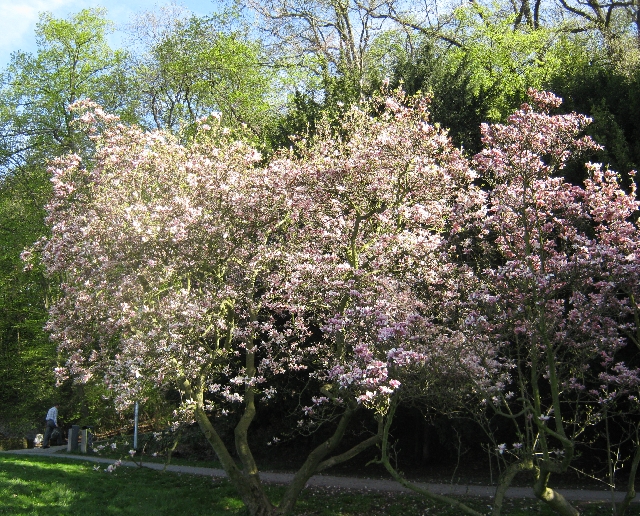
Magnolia flowering © Ricky Yates

Ever since I started writing this blog more than three years ago, I have always sought to recognise three important things. Firstly, I am a native first-language English-speaker. Secondly, I am an expatriate, living in a foreign country – in my case, the Czech Republic. Thirdly, I am a Christian minister – an Anglican priest in the Church of England.

Therefore, as far as I am concerned, numerous consequences flow from these three things.

  • As a native first-language English-speaker, it behoves me to use correct English spelling and grammar; particularly so when I have written and posted many times about the numerous examples of Czenglish which I regularly encounter.
  • As a foreigner resident in the Czech Republic, it is essential that when I write about Czech history and geography, I get my facts and locations correct.
  • As a Christian minister, I have a duty and responsibility to always seek to be accurate and truthful in what I write and publish online.

In order to ensure I am true to each of these responsibilities, there are a number of precautions I take before posting anything either on this blog or anywhere else online. I always use a spell checker to pick up any spelling mistakes. And I also normally get someone else, usually Sybille, to read through what I’ve just written, to ensure what I want to say, is actually what I’ve written – not what I think I’ve written.

Of course, spell checkers do not think. If you misspell your intended word as another perfectly legitimate word in the English language, no spell checker will pick this up. An online friend of Sybille recently intended to write about ‘Public and private information’. What she actually wrote was ‘Pubic and private information’. You can imagine the hilarity that followed once this was spotted!

Likewise, I am quite thorough in checking my facts before publishing anything. For this, I use both books in my possession and online resources, always recognising that, because it’s on the internet, doesn’t necessarily mean that it’s correct!

Despite all of this, I do still make mistakes, spelling, grammatical and factual. So I am always grateful when someone picks this up and points out the error of my ways. Thank you Tim, for the correction of my spelling. Thank you Sean, for pointing out that I had Jan Hus born in the incorrect part of Bohemia. And thank you Katka, for spotting my more recent mistake, in writing ‘Prague’ when I clearly meant to write ‘Brno’.

You will only know about these errors if you follow each of these links and scroll down to the comments. This is because, as soon as an error is pointed out to me, I correct the main text. But if the correction is made via a comment, then the comment still gets published, followed by a thankful and apologetic comment in response from me, acknowledging my mistake.

The reasoning behind this blogging and online philosophy of mine is quite simple. I write because I want others to read what I write, take it on-board and think about what I say. I want what I say to be taken seriously. Incidentally, it is ‘seriously’ and not ‘serious’, an ever-increasing error in spoken and written English!

This is because when I read something online which contains bad grammar, careless spelling and/or glaring factual errors, I have great difficulty in giving much credence to what that author is trying to say, even though they may be very well-intentioned. So consequently, I often do leave comments on other expat blogs, online newsletters and on Facebook, when I spot something wrong, be it a funny but unintentional typo, or a factual inaccuracy. I do this because, as I explained previously, I appreciate it when people do this for me because, so far as it is possible, I don’t want to ever be inaccurate or untruthful in what I publish online.

Most of the time, the response I get is similar to mine. The writer is grateful for the error being pointed out, their text is corrected, and a friendly acknowledgement is given. But in recent months, I’ve had a small number of rather negative responses. These have ranged from complaints that I’m ‘always finding fault’, through to the dismissive, ‘it’s vaguely right so why does it matter?’

Of course, everybody is entitled to their opinion and I am very aware that, having worked in publishing for several years before my ordination, I do possess what is usually known as ‘proof-reader’s eye’. But when these comments come from first-language English-speaking expats who cannot be bothered to use English correctly or get their facts right about the country they are now living in, I have great difficulty in giving any credence to anything else that they write about.

Am I being too harsh? Am I being pernickety (British English) or ‘persnickety’ (American English)? And I would be interested to hear about other people’s blogging/online philosophy. As always, comments and discussion are welcome.

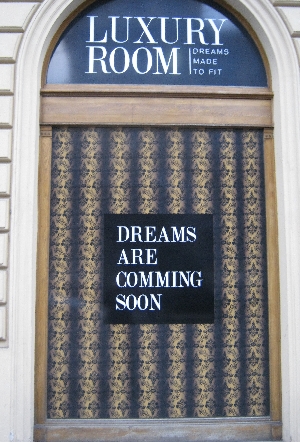
Dreams are comming soon????? © Ricky Yates

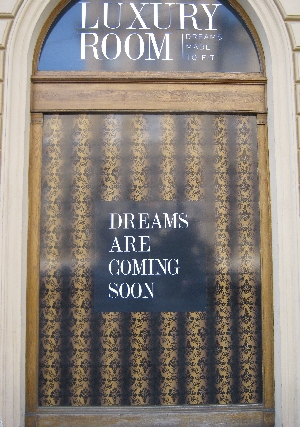
Spelling corrected! © Ricky Yates

Last Wednesday, 29th February, I was walking past a newly renovated building at the western end of Klimentská, the street in which St. Clement’s Church is located, when I spotted the graphic design work illustrated in the photograph on the left above, with the blatant misspelling of the word ‘coming’. Later that evening, I posted the photo on Facebook, asking what it cost to create the artwork and why those who commissioned it were not willing to spend a few more Czech crowns by asking a native English-speaker to check their text.

My posting on Facebook has since attracted 14 comments, many of them humorous. But one of the most telling was that of Karen who remarked, ‘When a luxury place can’t spell, they look cheap!’ That was my immediate reaction too, as soon as I saw it.

What I didn’t say when I posted the photo on Facebook was that, as I stared incredulously at this absurd error, two young ladies came out of the building and saw me with a look of amazement on my face. So I said to them in English, “Do you realise how stupid that looks?” To be fair, once I pointed the mistake out to them, they both immediately acknowledged that there was a serious spelling error.

My past experience when I have pointed out examples of Czenglish, is that the perpetrators rarely see any reason to correct what they have previously written or printed. Therefore I was most surprised that when, 48 hours later, I once more walked past the building, the spelling error had been corrected as can be seen in the right-hand photograph.

On close inspection, I realised that, rather than going to the expense of completely re-doing the artwork, instead a sticker had been made with ‘coming’ correctly spelt, and placed over the previous error. But I have to say that, of all the examples of Czenglish that I have previously highlighted, this is the first one I have ever seen corrected. I just hope it isn’t the last!

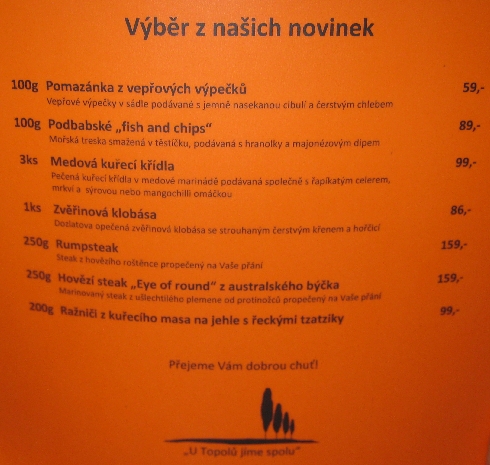
Czenglish in a Czech menu © Ricky Yates

This evening, we went to eat at one of our favourite local bar-restaurants – U Topolu. The name means, ‘to the poplars’, hence the logo at the bottom of the menu in this photo. On each of the tables, there was this laminated card advertising various new additions to their main menu.

The penultimate item yet again had us in stitches. For those who cannot read or understand Czech, it is seeking to describe what, in English, would be called an ‘Australian rump steak’ or a ‘Rump steak from Australian beef’.

There was no supposedly English version of these additions to the menu. What you have here is Czech Czenglish – a menu in Czech, trying to appear sophisticated, by using English to describe a certain item. But in describing the steak as, ‘Eye of round’, they have used Czenglish.

U Topolu is one of several places where we have offered our help, as native speakers of English or German, to translate their menus so that they make sense, rather than being the source of amusement. As ever, our offers have been spurned, leaving the bar-restaurant owners looking totally stupid in the eyes of every non-Czech speaker who enters their premises. But do they care?

Sunset over Podbaba © Ricky Yates

Where is winter? It is a question I’ve been asking for several weeks. This time last year, there had been snow lying on the ground for about seven weeks. Until yesterday, when we finally had a few heavy snow showers, there had been no snow at all in Prague this winter.

The temperature this evening has just dropped below freezing and the forecast is for temperatures of below 0 degrees Celsius for the next four nights at least. But there is still no sign of any serious snow.

There is a very good reason why I want some serious snow and for temperatures to remain below freezing for many days at a time. To ensure that the mosquitoes are kept at bay!

In the Autumn of 2008 when we first arrived in Prague and throughout the warmer months of 2009, we suffered from an abundance of mosquitoes here in the Chaplaincy Flat and elsewhere. Then two successive severe winters caused their numbers to drop to a handful. I fear that a mild winter might just allow the Prague mosquito population to recover!

In the meantime, a few evenings ago, we did experience this wonderful sunset, the picture being taken from one of the balconies of our flat. The floodlight pylon belongs to the stadium of FK Dukla Praha who, like the rest of the football clubs in the Czech Gambrinus liga, are on their mid-season break which started in early December and doesn’t conclude until late February. In view of the mild weather we have experienced so far this winter, they could still be playing!

As I mentioned in my recent sad post about Sam the dog, one of the many great things he did for Sybille and I was to get us out walking far more than before we adopted him. He became our ‘weight loss programme’ because he exercised us as we exercised him! We are both determined to continue walking just as much as we did when we had Sam so as to maintain our weight loss which between us now exceeds 30 kilos.

Most days, we would walk from the Chaplaincy Flat to the extensive and beautiful Stromovka Park, which lies about twenty-five minutes walk away from where we live. Through doing this, we got to know numerous other Czech and expat dog owners and improved our ‘dog Czech’ no end.

Talking on my mobile phone © Ricky Yates

However, one behavioural habit which I regularly observed and continue to observe, annoys me intensely – dog owners and parents of young children, who go to the park, but then spend the whole time they are there, talking to someone else on their mobile phones!

The most extreme example I remember was of a woman we met, just by the entrance to Stromovka. She was pushing a buggy with a baby in it; was also holding onto the hand of a toddler and had a dog on a lead. She also was responsible for a slightly older toddler walking in front of her and for a second dog who was off-lead. But at the same time as all of this, she had her head bent to one side to hold her mobile phone next to her shoulder, in order to have a long conversation with one of her friends. I know women are meant to be able to multi-task, but…….

What conscious or sub-conscious message does such behaviour send to either the children or to the dogs? Why do people need to have such phone conversations if they are going to the park in order to spend quality time with their children &/or their dog(s)? Mobile phones are incredibly useful but they can also be a curse.

My photo is of a young woman walking across Václavské námestí/Wenceslas Square, also talking on her mobile, though admittedly, without dog or child in tow. But I hope I make my point – it is perfectly easy to say in response to a call, “I’m in the park with my dog/my children. I’ll call you back when I get home”.

Historical 'Restaurat' in Malá Strana © Ricky Yates

As part of our ongoing walk programme, as well as walking to and around Stromovka Park, Sybille and I have also recently started walking around some of the more central areas of the city, particularly as they are currently relatively free of tourists! However, I’m afraid I cannot resist posting this further wonderful example of Czenglish we spotted one evening recently in Malá Strana. What might be on the menu at a ‘Restaurat’?

Finally for this post, below are two photographs, both of which brought a smile to my face as I hope they will for the many readers of my blog.

This year, New Year’s Day was a Sunday. Our Church Treasurer Gordon is a Scotsman and marked Hogmanay, by coming to Church in his kilt. I did jokingly suggest that he could put the collection in his sporran to take it home to bank the following day! I should add that it is post-Eucharistic coffee rather than a wee dram that he is drinking!

And alongside is an invitation to ‘Explore the meaning of life’ – in Czech!

Gordon in his kilt on New Year's Day © Ricky Yates

An invitation to 'Explore the meaning of life' - in Czech!

Tábor with the spire of the Church of the Transfiguration of our Lord © Ricky Yates

As part of my two weeks of annual leave following my return from the Eastern Archdeaconry Synod in Bucharest, Sybille and I spent a long weekend at the beginning of October, staying in Tábor, exploring this fascinating historical town and parts of the surrounding area of South Bohemia. During the whole time we were there, we were blessed by some wonderful ‘Indian Summer’ weather as can be seen in the accompanying photographs featuring very clear blue skies.

Tábor lies about 100 kilometres south-east of Prague and it took us less than two hours to drive there. After walking around the historic centre of the town, we eventually found excellent accommodation in Penzion Modrá ruže which has a gated back yard where we were able to securely park the car.

The historic centre of Tábor is perched on a steep hillside overlooking the Lužnice River and is surrounded on three sides by precipitous wooded slopes. In the fourteenth century, a castle was built here though all that remains of it is the Kotnov Tower by the west town gate which can be seen in my photo accompanying an earlier post.

Tábor proper was founded by the radical followers of Jan Hus in 1420, five years after he was burnt at the stake in Konstanz. The town was named after the Biblical Mount Tábor (Psalm 89. 12) which is thought by some to also be the mountain on which Jesus was transfigured. The Hussites sought to organise the town following the example of the very early Christian believers by holding everything in common ownership as described in Acts 2. 44-45. They joined together in communal work to build the town and its defences and it is often suggested that this extreme variety of nonconformity is what has given rise to the connotations we now associate with the word ‘Bohemian’.

Historic building in Tábor © Ricky Yates


Despite its defensive site, the forces of the radical Hussites of Tábor were eventually defeated at the Battle of Lipany in 1434 and thereafter, the significance of the town declined. Fortunately, much of the wonderful architecture of the period has survived.

These two photographs are of buildings that surround Žižkovo námestí, the main central square in Tábor, named after the Hussite leader Jan Žižka. Unfortunately, the Hussite Museum, having been closed for stocktaking the two days before we arrived, did not re-open at the weekend as according to its own website, it should have done. Instead, it was scheduled to re-open on Wednesday 5th October, the day after we left Tábor to return to Prague. However, not being able to visit it does give me a good excuse to re-visit Tábor some time in the future.


Hussite Museum building in the centre of Tábor © Ricky Yates

Tábor also features many buildings with sgraffito decoration. However, I did find it a little incongruous that that this wonderfully beautiful ancient building was now being used as a fast-food outlet!

Beautiful scraffito decorated building now used as a fast-food takeaway © Ricky Yates

Second World War memorial in Tábor featuring a Soviet soldier, machine gun over his shoulder, lifting a child into the air © Ricky Yates


In the more modern part of Tábor, to the east of the historic centre, I came across two examples of things I’ve previously written about in this blog. The photograph on the left is of a memorial commemorating the liberation of Czechoslovakia, (as it was then), from the occupying Nazi forces. It is a typical example of communist era architecture showing a Soviet soldier, machine gun over his shoulder, lifting a child into the air. Underneath is the correct date of the end of the Second World War, 8th May 1945. But as I explained in my earlier post entitled ‘Correcting History’, because the Nazi surrender was signed late in the evening of 8th May 1945, it was already after midnight in Moscow, thus meaning that the former Soviet Union and its satellite states, always celebrated VE Day (Victory in Europe Day) on 9th May each year.

Since the Velvet Revolution of 1989, VE Day is now celebrated and marked with a public holiday, on 8th May each year in the Czech Republic. If you look closely at the inscription in the second photograph, it is quite clear that the ‘8’ is far newer and shinier than the rest of the lettering. No doubt it replaced a previous ‘9’! Likewise, because this is a memorial erected in the Communist era, it originally featured the hammer and sickle emblem. This was clearly removed at some point after 1989 but, an outline of where it once was, can still clearly be seen on the stone work above the date.


The inscription with a new '8' and with the outline of the now removed hammer & sickle emblem still visible © Ricky Yates

Finally, despite promising not to feature anymore examples of Czenglish, or ‘bad English’ as one of my fellow cricketers thinks I should call it, I cannot help but post this photograph of a sign in Tábor that had Sybille & I in fits of laughter. Bearing in mind that Tábor is not so far from the Austrian border and German speaking visitors are quite numerous, it appears to be an advertisement in German for a ‘Nothing Club’!

A sign for the 'Nothing Club' in Tábor © Ricky Yates