How to be Czech in 10 easy steps

Beer
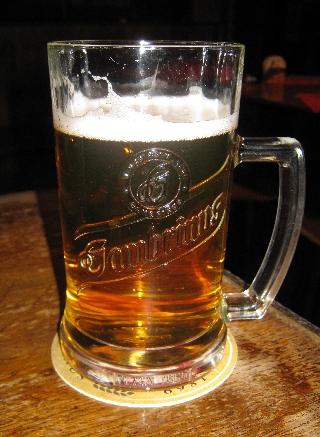
Half a litre of Gambrinus Czech beer © Ricky Yates

A few months ago, a British friend who has lived in Germany for many years, alerted me to this online article entitled, ‘How to be German in 20 easy steps’. It is written by a British man who is obviously trying to become accepted in the country in which he is now resident. The article had both Sybille and I in stitches 🙂 But ever since reading it, I have been formulating in my own mind, the equivalent article. So after nearly four & a half years of living as a cizinec / foreigner in the Czech Republic, here is my guide in ten easy steps as to ‘How to be Czech’.

1. Drink beer

The Czech Republic has the highest per capita consumption of beer of any nation in the world. The country also produces an abundance of excellent brews including Pilsner Urquell, the world’s first pilsner pale lager beer, Budvar, Kozel, Gambrinus, Radegast, Staropramen, Krušovice, Starobrno, Bernard and Svijany. In very simple terms, if you want to be Czech, you need to drink beer and enjoy doing so.

You also need to know how to drink beer – in particular to remember that in a Czech bar, your beer glass must always be placed on a beer mat. And going into a Czech bar, sitting at a table, taking a beer mat from the central container, and placing it in front of you, will frequently result in a half litre of Czech beer arriving, without you having to say a word! And be reassured – as far as Czech people are concerned, beer is not alcohol 🙂

2. Get a title

The Czech people love their titles – and use them! Even a simple office worker seems to have Ing. (Engineer) in front of their name. My recent reminder to renew my car insurance came from Ing. Pavel and Ing. Annabella, who both work for the Czech branch of a well-known German insurance company.

I was tempted to illustrate this point by photographing the mail boxes on the ground floor of our apartment block, but decided for reasons of personal privacy, it would be unwise to do so. But you would be amazed how many Mgr., Ing., JuDr., etc there are in our neighbourhood. Therefore our mail box very firmly has ‘Rev’d’ in front of my name. For if you are going to be Czech, you need to have a title!
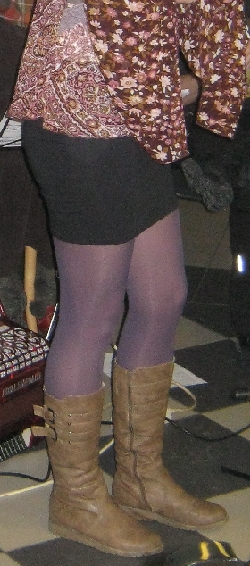
Short skirt © Ricky Yates


3. Dress Czech

Whilst recognising that I’m now setting foot where most angels would fear to tread, here is my advice to ladies as to how to dress Czech. Ladies – when wearing a dress or skirt, make sure that it is short – basically finishing mid thigh or even higher! And do not think that this is just restricted to young ladies. In the Czech Republic, you will frequently see a mother and her daughter out walking together, with the daughter pushing a buggy containing her new-born infant. You will then often notice that there is a competition between mother and the new grandma, as to which one has the shorter hemline.


Another aspect of the Czech female look is showing cleavage – usually plenty of it. Please don’t think to reserve such a look for a romantic evening dinner with your boyfriend or husband. If you are going to be Czech, showing plenty of cleavage &/or wearing a short dress or skirt is also the required dress code for going around town during the day and for wearing to the office.
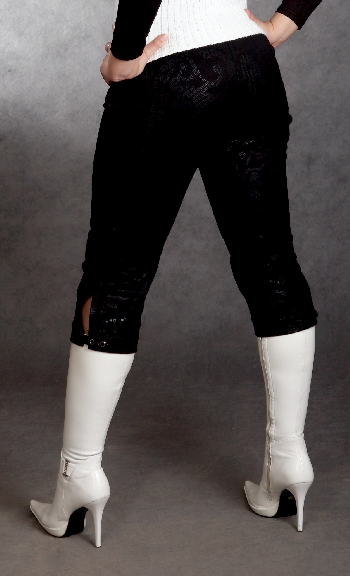


Tight jeans, boots & high heels


When it does get really cold, then the correct Czech female look is spray-on jeans tucked into knee-high boots. And the boots really should have high, narrow heels, despite the cobbled streets and pavements of the historic centre of Prague and other Czech towns and cities. For part of being a Czech lady is being able to walk in such heels and not trip up on the cobbles.

Czech male pony tail © Ricky Yates

There is far less of a dressing Czech code for men. But if any man wants to really be Czech, he needs to stop worrying about having his hair cut. A true Czech man has long hair and ties it back in a pony tail. As with ladies and short hemlines, the pony tail look is not just restricted to young men. Plenty of Czech men in their fifties & sixties have them too. Gents – you want to be Czech? Grow a pony tail!

4. Take your shoes off when entering a house or flat
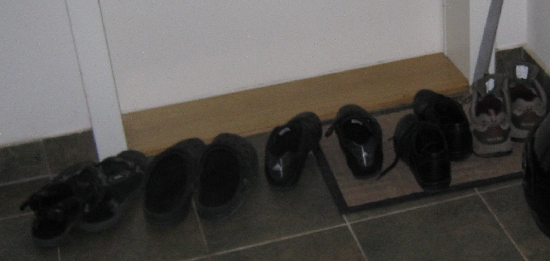
Take off your shoes upon entering a Czech home © Ricky Yates

Upon your arrival at the entrance door of a Czech home, you must take off your shoes. Your Czech host may well say, ‘Oh don’t worry about your shoes’. Ignore what has been said and still take off your shoes, leaving them in the entrance hall by the door. Failure to do so will result in you forever being known as the foreigner who didn’t take off their shoes. Nobody will ever think you are Czech.

Don’t just obey this rule when entering a Czech home. Adopt the same rule in your own home too. Then when Czech people come to visit you, not only will they take their shoes off upon arrival, they will recognise that you are also on your way to being Czech.

A happy couple roller blading


5. Be sportif

Despite Czech cuisine being somewhat unhealthy – if you can deep-fry it, they will 🙂 – you still see remarkably little obesity. The reason is that in order to be Czech, you need to be sportif. Go out for a gentle walk in a city park or alongside the Vltava River, and you will be passed by a succession of joggers, cyclists, skateboarders and roller-bladers. To be really Czech, you need to be one of them.

Having a baby or toddler that needs to be pushed around in a baby buggy or stroller is no excuse. Just pop on your roller-blades and push the buggy/stroller in front of you. This is strollering – the ideal form of exercise to lose weight after giving birth. If you don’t have the confidence to try it, classes are available as this poster below explains.


Advert for learning strollering © Ricky Yates

If none of these sportif activities appeal to you, then try playing floorball, a form of indoor hockey at which Czechs excel. Or go ice skating in winter, play tennis in summer. Yes – part of being Czech is being sportif. See also what follows in points six and seven.

Chata © Zygmunt Put
Chata © Zygmunt Put

6. Go to the chata or chalupa for the weekend

One little frustration of living in the Czech Republic is the impossibility of getting anything done in most offices on a Friday afternoon. Why? Because everybody is busy packing up and clearing their desks so they can head off to spend the weekend in the chata or chalupa.

A chata is a (usually) wooden small hut or chalet, located out in the Bohemian or Moravian countryside. A chalupa is a bigger and usually more substantial version of a chata – a ‘country cottage’ might be an appropriate description in English. Particularly for any English-speaker who has fallen in love with a member of the opposite sex who is Czech, going to spend the weekend with the Czech relatives at their chata/chalupa, can be the make-or-break experience as to whether the new relationship will flourish and will certainly define whether, as a foreigner, you are going to succeed in becoming Czech.

Part of the chata/chalupa weekend experience is also being sportif, as in point five. Cars leaving Prague on a Friday afternoon will have bicycles up on the roof rack in summer, or skis/snowboards in winter. Some wealthier Czechs will have horses at their chalupa, ready for weekend riding. It isn’t just going to the chata/chalupa for the weekend – the real test for being Czech, is joining fully in the whole experience, including the various, mainly sportif, activities.

7. Enjoy being out in ‘the nature’

Even for those Czech people who don’t own or have access to a chata/chalupa, going out into the Czech countryside and being in ‘the nature’ as they tend to say in English, is deemed highly important. If you want to be Czech, you need to do so too, and be seen to enjoy it.

This means taking the train out of the big city to a small village or town, and then walking for many kilometres along one of the numerous way-marked paths through the forests and over the hills, to another spot where you can catch the train home at the end of the day. Or heading out of the city to where you can hire a canoe and paddle your way along the river, over a few rapids, to a distant location many kilometres downstream.
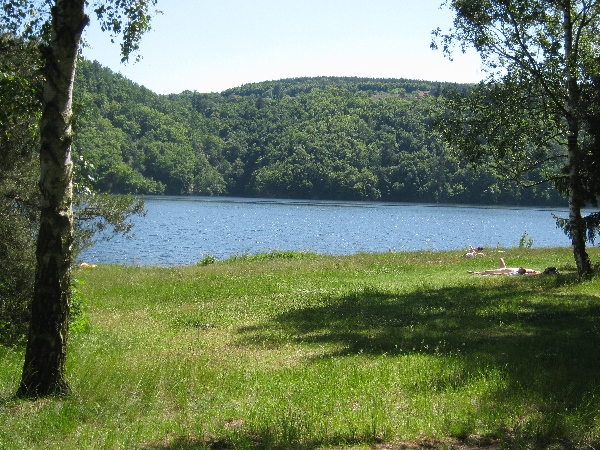
Slapy Lake © Ricky Yates
Czech people enjoying being in ‘the nature’ at Slapy Lake © Ricky Yates

In summer, these activities can also often include swimming in the many rivers and lakes that are part of ‘the nature’ in the Czech Republic. And for some Czechs, being in ‘the nature’ also means being ‘au naturel’. Certainly don’t expect changing facilities at river and lakeside bathing spots and be aware that many Czech women don’t believe in wearing bikini tops. If you want to be Czech, just join in doing what Czech people do when they are in ‘the nature’.

8. Get a dog

The statistic I’ve read is that 40% of Czech households, have one or more dogs. I often think it might be higher than that. But as I know from our personal experience with Sam the dog, if you have a dog, suddenly complete strangers start talking to you and, far more importantly, to your dog. You have a dog? You must be Czech!
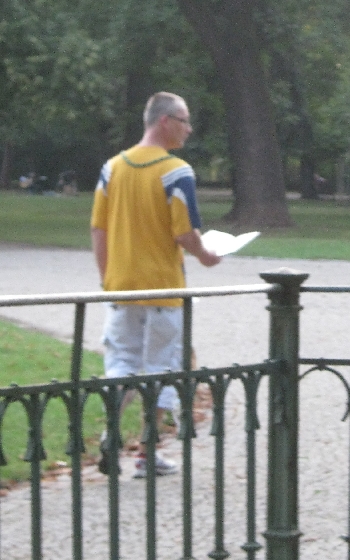
A man walking through Letna Park, reading a book © Ricky Yates

9. Read a book – wherever you are

Czech people love books and love reading. The number of flourishing bookshops is testament to their love of reading. To be Czech, you need to be a bookworm too. But don’t confine your reading to fifteen minutes in bed before you go to sleep. No – read a book wherever you are.

What does that mean? It means reading on the tram, metro or bus and whilst standing & waiting for the tram, metro or bus. But don’t just restrict yourself to these locations. The real test as to whether you are Czech is being able to read and walk along at the same time! Yes – you need to be able to read a book, wherever you are and whatever you are doing.

10. Speak Czech

The most obvious, but also the hardest. Whilst many younger Czech people, welcome the opportunity of speaking English with a native speaker, and will respect you for having adopted and practised points one to nine above, the final test is being able to speak their language. Which means getting four genders and seven cases correct, every time 🙁

Did I mention ten easy steps. Sorry – I meant nine relatively easy ones and one that is extremely difficult.

Update December 2013

Following a further major upsurge of interest in this post, I’ve written and posted an update entitled ‘How to be Czech in 10 easy steps- revisited‘.
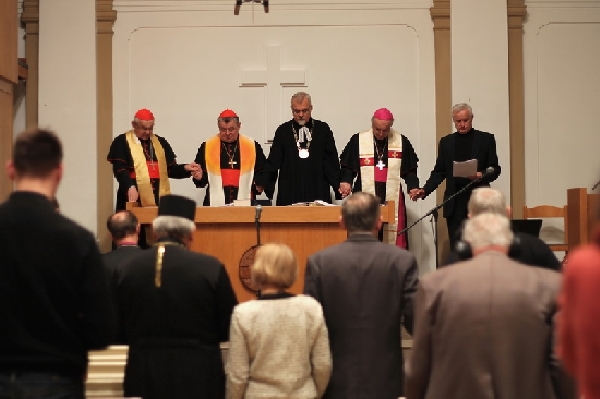


The resignation of Pope Benedict XVI

Two Cardinals, the Protestant head of the Czech Ecumenical Council, a Roman Catholic Bishop, & a Protestant layman. But only Cardinal Duka, (second left), will vote in the papal conclave © Old catholic Church in the Czech Republic
Two Cardinals, the Protestant head of the Czech Ecumenical Council, a Roman Catholic Bishop, & a Protestant layman. But only Cardinal Duka, (second left), will vote in the papal conclave © Old Catholic Church in the Czech Republic

I was going to write about something completely different, but as today’s news media is most unusually, full of a story about one part of the Christian Church, I think I’ll be topical instead. Yes – most unexpectedly, Pope Benedict XVI has this day announced his intention to resign his office at the end of February – the first Pope to do so for nearly 600 years.

What is one to make of all of this? The official reason given for Pope Benedict’s decision to resign is his increasingly frail health. He is nearly 86 years old and in recent times, has been pushed around St. Peter’s Cathedral in what might best be described as a ‘papal trolley’. Those who support this explanation point out that he oversaw the decline in health of his predecessor Pope John Paul II and the paralysis this brought upon the leadership of the Roman Catholic Church. Some even say that he actively suggested to John Paul II, that he should resign, and that he is now acting upon his own advice.

There is always the alternative view of the conspiracy theorists. These suggest that Pope Benedict has been the victim of an internal power struggle within the Roman Catholic Church hierarchy. That he jumped before he was pushed or he was aware of some new sexual or financial scandal breaking and wants to get out before it does. Whilst personally, I am perfectly happy to accept the former official explanation, I do find it interesting that two Irish former members of the RC Church who are now part of my Prague Anglican congregation, have both suggested to me today that there is much more going on behind the scenes than the official explanation. Maybe they are right in recognising what they believe is happening from their own personal experiences of the Roman Catholic Church.

A big religious news story such as this, has once more revealed the religious ignorance of so many journalists. The best one I’ve seen so far is on the BBC News website, who have a quotation from ‘the newly enthroned Archbishop (of Canterbury, Justin) Welby’. Please note BBC, that Bishop Justin Welby is not being enthroned as Archbishop of Canterbury until 21st March 2013. You could try checking his website 🙂

What I have also seen and read today, is what I have experienced many times when visiting the next of kin of a recently deceased person for whom I’ve been asked to officiate at their funeral. Everybody is full of what a wonderful person Pope Benedict is and has been. No quoted speakers are being critical of his pontificate, with the obvious exception of a few total secularists. Yet whilst I would not want to question Pope Benedict’s own personal Christian faith or his devotion to the Roman Catholic Church, I have to say that I am not unhappy to see him resign. However, I will say that I fully respect and admire his stated reasons for doing so. He has now set a precedent for his future successors by indicating that they are not required to stay in office until they die!

Like many practising Roman Catholics and others, I believe that the pontificate of Pope Benedict XVI, has taken the Roman Catholic Church away from the major reforms instigated by the Second Vatican Council in the 1960s. One of the most telling examples of this is the fact that his resignation announcement today, was made in Latin! Whilst he has made positive ecumenical statements, especially when visiting countries which do not have a Roman Catholic majority population such as the United Kingdom, his actions speak louder than words. The creation of the Ordinariate for disaffected Anglicans, behind the back of Archbishop Rowan Williams, is a particular example.

Inevitably, the news media is already full of suggestions as to who will be elected as the successor to Pope Benedict. As I mentioned earlier, such discussions once more show the ignorance of many journalists. But whoever is elected as the next Pope, is going to have to face up to a number of pressing realities if they really want the Roman Catholic Church to survive into the 21st century. Many of these have been articulated by the Austrian Pfarrar Initiative which I’ve written about previously on this blog. It will be most interesting to see who is elected and how that person sets about addressing issues such as the declining number of priestly vocations in Europe and North America, pastoral care and admission to the sacraments for divorced and remarried believers, etc, etc.

I finish this post with a joke from a German website, posted well before today’s announcement. The current Pope and God are having a discussion.

Pope Benedict asks God, “Will there ever be married priests?” God answers, “Not in your lifetime”.

Pope Benedict then asks God, “Will there ever be female priests?” God answers, “Not in your lifetime”.

Pope Benedict then asks God a final question. “Will there be another German Pope?” God answers, “Not in my lifetime!”

Happy Fourth Birthday to my blog and an update on previous posts

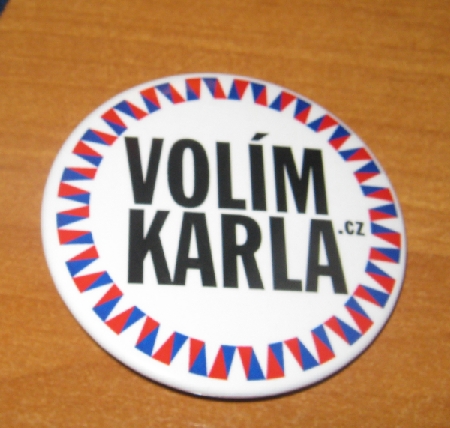
Lapel badge for supporters of Karel Schwarzenberg © Ricky Yates

Today my blog celebrates its fourth birthday. I wrote my first ever post four years ago today – this post today is post number 213.

Whilst today is a day for a little celebration, I still am somewhat disappointed with myself. A year ago when writing a blogpost to mark the third birthday of my blog, I promised to write at least fifty-two posts during the following year that ended yesterday. I fell short – I only managed fifty.

It is not that I lack things to write about as I have at least four topics noted down for future posts. It is the problem of finding the time to sit down and compile a coherent post when I also have a rather important day-job to do. Of course, it isn’t a job but rather a vocation. And I hold an office rather than having a job description to fulfil. But I hope my blog readers understand what I mean.

I am also very aware that I’ve written about certain issues or events in the past, but never given a further update. So let me use this fourth anniversary post to correct that omission.

Czech Presidential Election

Further to my earlier post, the second round of voting took place on Friday 25th & Saturday 26th January. The outcome was a victory for Miloš Zeman, who gained just under 55% of the vote, with just over 45% going to Karel Schwarzenberg. Sadly the outcome has resulted in bitter recriminations and left a somewhat divided country.

Schwarzenberg polled extremely well in Prague taking two thirds of the vote. He also polled well in other major cities, especially Brno, and was very popular amongst educated young people. On the other hand, Zeman polled well in the rural area and smaller towns, and also in those areas where there was once heavy industry which now no longer provides employment to any great degree. In simple terms, those who have prospered in the last twenty years and those who through higher education, see good future prospects for themselves, voted for Schwarzenberg. Whilst those who have done less well since the Velvet Revolution in the rapid move to a market driven economy, voted for Zeman.

Recriminations have been around the tactics used by Zeman and his supporters, during the final days of the election campaign. These have been variously described as populist, nationalist and xenophobic. They included complaining that Schwarzenberg’s wife doesn’t speak Czech, (she is Austrian), that Schwarzenberg isn’t really a true patriot because he lived abroad during the time of the Communist regime, and over remarks he made about how the Beneš decrees, which resulted in the expulsion of the Sudetendeutsche in 1945, would now be regarded as ethnic cleansing.

The complaints from the Schwarzenberg camp about Zeman, relate to his personal character and those who supported his campaign. His campaign was well funded but without total clarity as to who did so. He is known to have connections with some Russians and other dubious characters and the fear is, that these supporters, will expect some form of financial payback during the next five years.

Zeman is also known as being a heavy smoker and heavy drinker. On the light-hearted side, I’ve already seen a photo-shopped image of him meeting my Queen with a cigarette in his hand, and asking for an ashtray 🙂 More seriously, he was filmed falling over whilst walking from where he was sitting watching the TV coverage of the counting of the votes, in order to give his first interview, once it had become clear he had won the election. Whether it was a genuine trip or the result of several shots of Becherovka is a matter of debate.

My latest run-in with Czech Bureaucracy

Today I resumed battle with Czech bureaucracy, in my attempt to exchange my current UK Driving Licence, for Czech Driving Licence. And I had fifty percent success!

By presenting a signed and stamped document on headed notepaper in the name of Farní obec Starokatolické církve pro verící anglického jazyka v Praze, the legal entity of my congregation with the Czech Ministry of Culture, in which I stated in Czech, that Sybille and I have permission to live in the Chaplaincy Flat where we have lived in for the past four and a half years, I successfully proved that this is my permanent family home. Success came because I was also able to also present a notarised copy of the congregation’s registration with the Czech Ministry of Culture, which shows me as the authorised person to sign on its behalf.

But at the same time, I was turned into a layman. Despite having my title of ‘Rev’ on two official documents, (driving licence and passport), of another EU state, I will not have ‘Rev’ in front of my name on my new Czech Driving Licence which will be issued to me on 21st February. I do find it very poor that, a nation for whom having academic titles in front of their names is so important, that they will not accept mine. I am given to understand that only Czech academic titles are acceptable. Clearly this is a decision made by JUDr Czech Bureaucrat. 🙁

I am hopeful that this will be my last run-in with Czech bureaucracy. However, if it is, I might struggle to find material for at least fifty more blog posts in the coming year 🙂


Burn’s Night Supper and Ceilidh

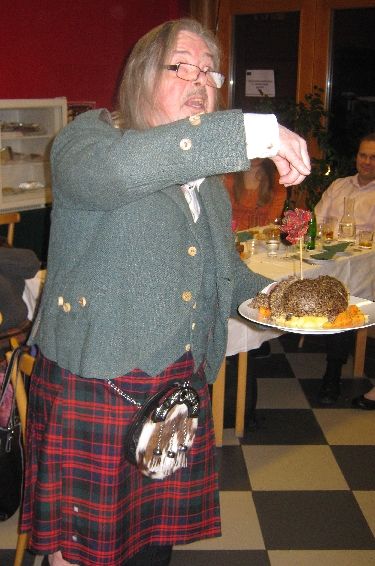
Gordon addresses the haggis © Ricky Yates

25th January is the birthday of the famous Scottish poet Robbie Burns (1759-1796). There is a long-standing tradition of holding a ‘Burn’s Night Supper on or around 25th January each year at which the life and poetry of Robbie Burns is celebrated. Brilliantly organised by my Church Treasurer, Gordon MacDonald Truefitt, St. Clement’s Church held a Burn’s Night Supper on the evening of Friday 25th January 2013 and combined it with a Ceilidh, at which various Scottish and Irish dances were taught and danced.

The evening was designed with two purposes in mind, both of which are somewhat inter-related. One was to try and put on a social event which would enable the disparate members of the congregation to spend time together and therefore get to know each other better. The second, was to provide an event to which members of the congregation could invite their non-worshipping friends, to experience and realise that Christians can have fun together and hopefully draw them into our worshipping community.

Through Gordon’s good offices we had both a most suitable venue – Michelský Dvur, belonging to the Sue Ryder Foundation. And we had an excellent Czech Celtic band ‘Mestská’, who entertained us whilst we ate and then provided the music for the Ceilidh that followed. Over fifty people attended of whom just over half were members of the congregation with the rest being invited friends and guests. As on any Sunday morning at St. Clement’s, the number of nationalities present ran into double figures.

I trust that the photographs below help to give a flavour to what was a wonderful evening.

Ceilidh dancing © Ricky Yates
Burns Night 3
David & Alison Hellam dancing with Larry & Celieta Leifeste © Ricky Yates

Larry from Texas meets the haggis © Ricky Yates

Burns Night 4
Richard York, Australian Churchwarden, but who has a Scottish grandmother, and his Czech/Australian wife Karen © Ricky Yates


My latest run-in with Czech bureaucracy

Our Lady before theTyn Church 2
Our Lady before the Tyn Church, Prague © Ricky Yates

Today I had yet another Kafkaesque experience.

Ever since coming to live and work in the Czech Republic, I have been driving my car here on the basis of holding a valid UK Driving Licence. I had been told previously that, if I was here for longer than six months, I should really exchange it for a Czech Driving Licence. I have had the completed form & new photograph to do so for some time, but have never got around to doing anything further about it. After all, my UK Driving Licence declares that I live at The Rectory in my former group of parishes in North Oxfordshire, which is the address the Czech Foreign Police firmly believe to be my permanent address because they insist that every foreigner living here, must have a permanent address outside of the Czech Republic. So, for better or worse, that was the one both Sybille and I put down when we registered with them in 2009.

However, whilst my UK Driving Licence is valid until 25th February 2022, the day before my seventieth birthday, the photocard part needs to be renewed every ten years, to include a more up-to-date photograph. My current photocard is due to expire in early March 2013, which has therefore prompted me to act and seek to exchange it for a Czech Driving Licence.

So this morning, I went to the Magistrát hl.m. Praha / the HQ of Prague City Council, together with a fluent Czech-speaking member of the St. Clement’s congregation, to apply for the exchange of my UK Driving Licence for a Czech one. Along with my completed form & photo, & both the photocard and counterpart of my current UK licence, I took my passport. This contains my Povolení k prechodnému pobytu v CR, my certificate of temporary residence in the Czech Republic which is neomezený / unlimited. And I took my Potvrzení o prechodném pobytu na území / Proof of temporary residence, which confirms that my address is Pat’anka 2614/11A, Praha 6-Dejvice

The lady who we saw, kindly informed me that the law changed in March 2012. Despite my passport with my Povolení k prechodnému pobytu v CR, valid ‘neomezený‘, in it, and my Potvrzení o prechodném pobytu na území, being perfectly acceptable documents to enable me to register my car and for Bishop Dušan to get me recorded by the Ministry of Culture as the person who can sign on behalf of Farní obec Starokatolické církve pro verící anglického jazyka v Praze, the legal entity of the Prague Anglican congregation, they are not now sufficient to prove that the Chaplaincy Flat at Pat’anka 2614/11A, is my ‘family home’.

To prove that the Chaplaincy Flat at Pat’anka 2614/11A is my ‘family home’ where I live, I must also produce Sybille’s passport with her Povolení k prechodnému pobytu v CR, valid ‘neomezený‘, in it, and her Potvrzení o prechodném pobytu na území. That is not a problem as I can easily do that. But I also have to produce a document in Czech, by the owners of the flat, that declares Sybille & I live in the flat and have the permission of the owners to do so.

The flat is being purchased in the name of Farní obec Starokatolické církve pro verící anglického jazyka v Praze and the Church are just over seven years through paying off a twenty year mortgage. I am the person who can sign on behalf of Farní obec Starokatolické církve pro verící anglického jazyka v Praze and I have a notarised copy of our registration with the Ministry of Culture which says that I am.

Therefore it appears that if I produce a statement in Czech, on a letterhead with our correct Czech congregational name and registered number and registered address, saying that Sybille and I have permission to live in the flat, and sign the statement myself – and most importantly stamp it – that will be sufficient proof. In other words, beyond the necessity of getting a statement written in grammatically and legally acceptable Czech, I will be writing and signing a statement which gives myself permission to live in the flat that my wife and I have lived in for nearly four and a half years. I wonder if Franz Kafka is listening or reading this?????

The other problem the lady raised was the question of having ‘Rev’ or ‘Rev’d’ as the title in front of my name. This despite my UK Driving Licence declaring me to be ‘Rev Warwick John Yates’, (‘Ricky’ comes from the diminutive of ‘Warwick’ for those who don’t know), and my UK passport stating on the page reserved for official observations, that ‘The holder is the Reverend Warwick John Yates’. She claimed that the only way my title could be included on a Czech Driving Licence is if I had a document, translated into Czech, explaining that the title had been awarded to me!

As I’m sure most of my blog readers are aware, ‘Reverend’, usually abbreviated to ‘Rev’ or ‘Rev’d’, is the normal title given to an ordained priest/minister throughout the English-speaking world. I do have two documents, both signed and sealed by the Rt. Rev’d John Taylor, Bishop of St. Albans, one confirming my admission and ordination to the Holy Order of Deacons on 2nd July 1989, and a second, confirming my admission and ordination to the Holy Order of Priests on 1st July 1990. What I do like about both of these documents is that they say about me ‘of whom sufficient learning and godly conversation We were assured’ 🙂 🙂 🙂 But neither document states that my title now is ‘Reverend’.

I do find it ironic that here in the Czech Republic, where titles are deemed to be so important, a topic that I shall be referring to very shortly in a planned future blog post, Czech bureaucracy is doing its utmost to deprive me of mine. However, rest assured that I will somehow find my way through this latest example of Kafkaesque Czech bureaucracy. But there just might be a few strangled Czech bureaucrats en-route 😉